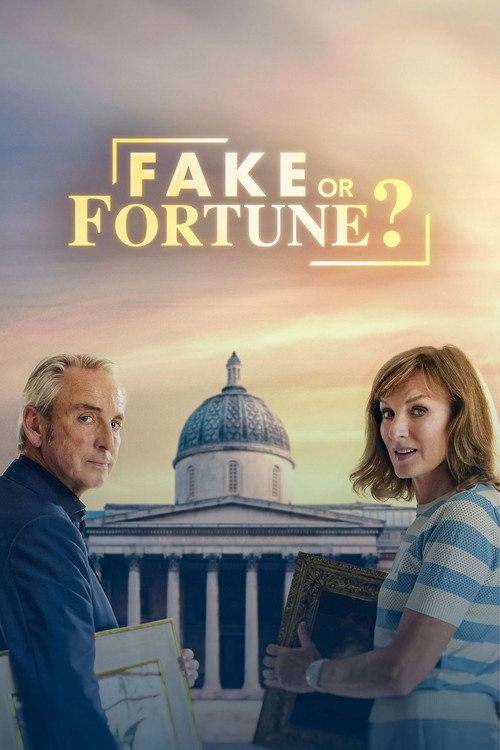
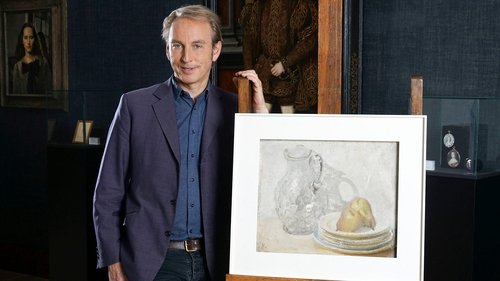
A still life bought for £165,000 as a work by William Nicholson was later excluded from the latest catalogue raisonné. Fiona and Philip assemble provenance records, handwriting evidence, infrared imaging and pigment comparisons in an attempt to prove that the painting is genuine, despite resistance from the leading Nicholson authority.
Two sketchbooks preserved for decades in a French garden shed may contain youthful drawings by Henri de Toulouse-Lautrec. The team travels to the artist’s family home and uses handwriting, paper and technical analysis to challenge an earlier rejection by the authentication committee.
A small watercolour from the Gurlitt art hoard is examined as a possible work by Henry Moore and as potentially Nazi-looted art. Infrared analysis, archival records and the history of Hildebrand Gurlitt are used to establish both authorship and an unbroken chain of ownership.
The team investigates two rare historical portraits of Black British women. One depicts Dido Belle with Lady Elizabeth Murray, while the other shows two elegantly dressed girls with a book. Scientific and documentary research seeks to identify the artists behind both important works.
A damaged plaster sculpture resembling Alberto Giacometti’s early Gazing Head is subjected to provenance research and CT scanning. The initial investigation ends without a firm ruling, but later discovery of a signature leads the Giacometti Foundation to authenticate the sculpture; it subsequently sells for more than half a million pounds. The Giacometti episode was originally intended for Series 6 but was delayed while the foundation continued its examination. It was later rebroadcast with an update after authentication.