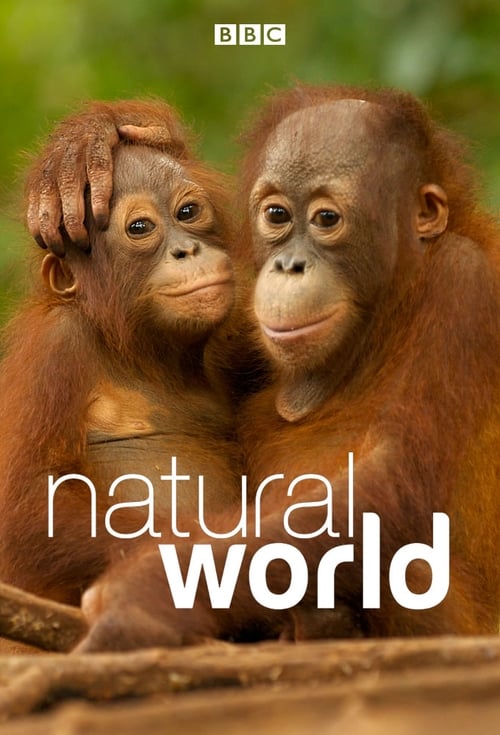
Natural World is a nature documentary television series broadcast annually on BBC Two and regarded by the BBC as its flagship natural history brand. It is currently the longest-running series in its genre on British television, with more than 400 episodes broadcast since its inception in 1983.
Natural World is produced by the BBC Natural History Unit in Bristol, but individual programmes can be in-house productions, collaborative productions with other broadcasters or films made and distributed by independent production companies and purchased by the BBC. Natural World programmes are often broadcast as PBS Nature episodes in the USA. Since 2008, most Natural World programmes have been shot and broadcast in high definition.
Natural World is a nature documentary television series broadcast annually on BBC Two and regarded by the BBC as its flagship natural history brand. It is currently the longest-running series in its genre on British television, with more than 400 episodes broadcast since its inception in 1983.
Natural World is produced by the BBC Natural History Unit in Bristol, but individual programmes can be in-house productions, collaborative productions with other broadcasters or films made and distributed by independent production companies and purchased by the BBC. Natural World programmes are often broadcast as PBS Nature episodes in the USA. Since 2008, most Natural World programmes have been shot and broadcast in high definition.
Season 13 episodes
Choose an episode, then use the watch options above for the show.
Focusing on a pair of albatrosses during the year they produce and raise a chick, Mysteries of the Ocean Wanderers is an engaging and atmospheric insight into the wildlife of the sub-Antarctic Crozet Islands. Delving into a previously unknown area, the film follows the intriguing work of French scientist Henri Weimerskirch as he uses satellite tracking and time-depth recorders to follow the ever changing population of these remote isles.
Documentary, filmed over a two year period, exploring the wildlife found in the New Forest in southern England, which the Saxons called Ytene. The woodland, bogs and heaths of the area are home to wild ponies, fallow deer, badgers, foxes, wildfowl, and insects. Seasonal changes are shown, and some elusive species, such as firecrests, hawfinches, woodlarks and tadpole shrimps are pictured. The programme is interwoven with a history of land use in the area from mediaeval times.
Observes some of the behaviour of the Bonobos, pygmy chimpanzees that inhabit a remote area of rainforest in Zaire. The species is considered to be man's closest living relative.
Examines the weird planktonic animals that drift in the current of the Gulf Stream as it passes Florida and enters the Atlantic. Follows a baby loggerhead turtle which hatches on a Florida beach and heads out to the Atlantic.
Documentary on the wildlife found through the four seasons in the estuary of the River Ythan in north-east Scotland, a five-mile stretch of marshes, mud flats and sand banks situated some ten miles north of Aberdeen. The waters of the estuary are home to waders, wildfowl, shellfish, small crustaceans, fish and otters. The estuary is a nature reserve and, since the 1950s, the University of Aberdeen has been running a research project to examine its complex ecosystem.
Delving deep into the tropical waters of the Caribbean Sea, this Emmy award-winning production celebrates the region’s bountiful life and impressive diversity. World-famous marine photographers Howard and Michele Hall explore this vast underwater world, their stunning cinematography bringing to light both the area’s radiant beauty, and that of its abundant wildlife population.
Looks at some of the unusual fauna found on the Indonesian island of Sulawesi, including pig-like creatures which have curled tusks growing through their cheeks, punk-crested primates, the world's largest snake and birds that incubate their eggs in volcanic soil.