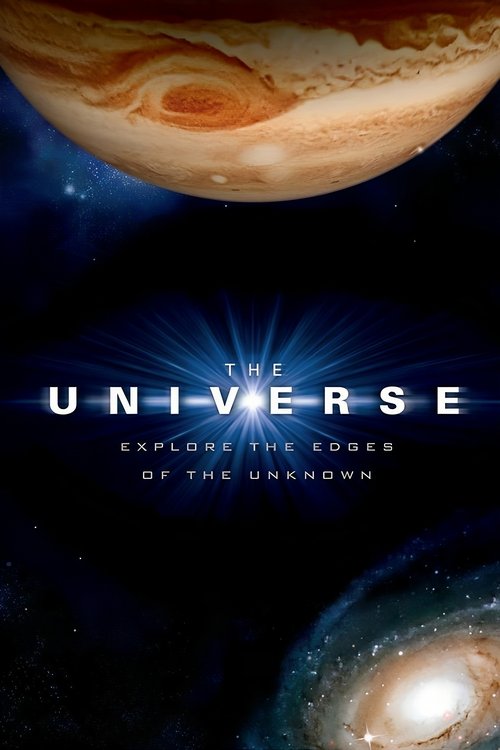
From the planets to the stars and out to the edge of the unknown, history and science collide in a wondrous yet deadly adventure through space and time.
The Universe is available to stream on DirecTV On Demand, Philo, Prime Video, and The Roku Channel in United States. You can also rent or buy it from Google Play, Amazon, Apple TV, and Fandango at Home. Use the direct links below to open the provider.
From the planets to the stars and out to the edge of the unknown, history and science collide in a wondrous yet deadly adventure through space and time.
Season 3 episodes
Choose an episode, then use the watch options above for the show.
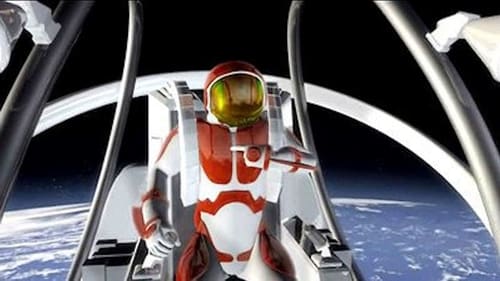
In space travel there is a saying that the first 50 miles and the last 50 miles are the most dangerous. See how a single spark inside a spacecraft or a micrometeoroid less than an inch wide hitting a space station can turn a routine mission into a lethal nightmare. As the missions become longer, venturing to Mars and beyond, the potential disasters will only become bigger. What would happen if a spacecraft ventured too close to a black hole or was hit by a gamma ray burst?
Some of the world's leading physicists believe they have found startling new evidence showing the existence of universes other than our own. One possibility is that the universe is so vast that an exact replica of our Solar System, our planet and ourselves exists many times over. These Doppelganger Universes exist within our own Universe; in what scientist now call "The Multiverse."
According to the laws of physics we can never travel faster than the speed of light...or can we? Light speed allows us to see things instantly here on Earth, and shows us the entire history of the universe going back nearly 14 billion years. Learn all about light speed, the ultimate constant in the universe and discover ways scientists envision breaking the "light barrier" which may be the only way the star travel of our imaginations ever comes to reality.
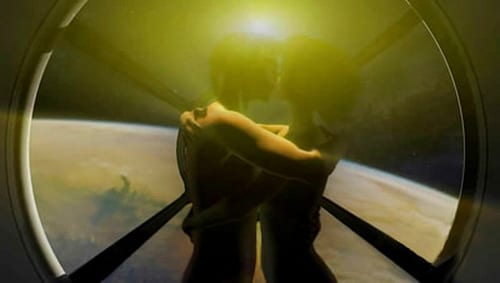
As man moves to colonize the cosmos, the realities of sexual relationships and reproduction need to be addressed. Probe the physiological, psychological and cultural challenges of sex in space. From the sex act through birth, look at how the extreme environments of space exploration might effect copulation, conception and developing human tissues, as well as how issues around sex might impact the emotional lives of astronauts. Get to the bottom of the rumors to find out if space sex has already happened, and look at how the burgeoning space tourism business may soon lead to a boom in space sex.
They soar through the heavens, fly through the oceans and glide along land. But these are not creatures found on a wildlife safari. These are life forms from another planet. Armed with scientific fact and a little imagination, experts come together to take you on an unprecedented journey to the edges of our imagination. Scientists, astrobiologists and astronomers create five lines of extraterrestrial evolution, and explain how creatures on the surface of Earth offer a helping hand to understanding life in The Universe.
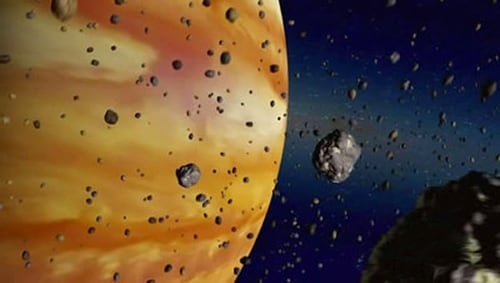
Asteroids and comets have left their imprint on planet Earth, literally. Since the turbulent formation of the solar system, these space rocks have continued to impact earth. Some have been so violent that they've led to mass extinctions. What's more, radical new theories suggest that asteroid and comet dust harbor deadly viruses that may have triggered some of our worst pandemics. The possibility of future cosmic collisions remains a legitimate threat. Yet, despite their dangers, asteroids and comets may hold vital natural resources, which could actually preserve mankind.
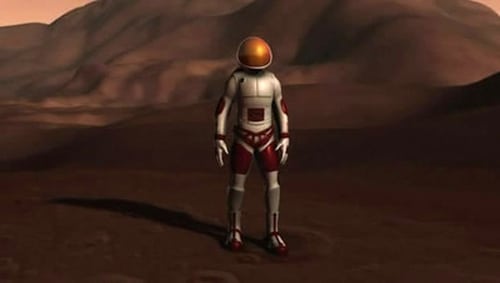
When mankind eventually leaves the cradle of Earth and ventures forth into the uncharted territories of the cosmos, where, and what form, will our new homes take? Will they be cities under glass, entrenched in distant alien soils? Will they be gleaming metropolises hanging in orbit above our heads, or in the lonely void of space? Will they be hollowed out asteroids, strip-mined for the valuables they horde? How will we grow food? What will the new era of spacesuits be like? The rovers that carry us around? Will robonauts, advanced robotic machines, perform the most dangerous tasks for us? How will we live... in space?
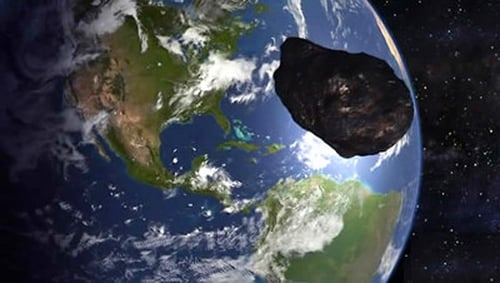
It sounds like a Hollywood blockbuster: a deadly asteroid is on a collision course with Earth. But in reality, it's only a matter of time before a giant space rock threatens to wipe out civilization. An asteroid took out the dinosaurs sixty-five million years ago. Are we next? This episode analyzes the threat and explores the many ways--from a nuclear bomb to ingenious new technology--that experts are proposing to stop Armageddon.
Could we be unique in the universe or is there another planet similar to earth somewhere in the cosmos? Is it possible that Alpha Centauri, our nearest star, is home to another earth-like planet? Earth sized planets have been hard to find, but indirect methods are coming on line to give scientists a good survey of how many such bodies may be in the universe. How rare would it be to find life on another earth-like planet?
An exploration of mysterious phenomenon, including alcohol clouds in space, pulsar planets, the possibility of a planet beyond Neptune, and dark matter.
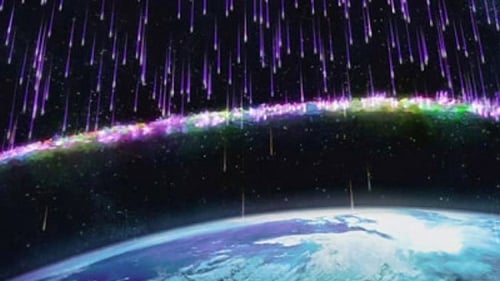
There have been both helpful and harmful effects on life on Earth from cosmic effects. Cosmic Phenomena includes the beauty of the Aurora Borealis and rainbows to the dangers of UV radiation and cosmic rays, from the miracle of photosynthesis to the thrill of a meteor shower as we explore the effects caused by the sun and other extra-solar sources, which can get under our skin and scramble man's technology, make life possible and be a threat to our existence all at once.
The majority of space exploration has occurred in Low Earth Orbit, around 120 miles above sea level. For a cool $20 million, any person can take a ride on the International Space Station, around the 1,100 mile band around Earth. Commercial prospects for LEO are huge, there are big dangers lurking for anyone interested in traveling this way, such as radiation, , cosmic rays, and space debris numbering in the thousands threaten any spacecraft traveling in orbit. It's a new frontier and maybe the final frontier, and the possibilities are endless if you are willing to travel to the edge of space exploration.